
Buying an ex-investment property in Australia: what to check in the building inspection
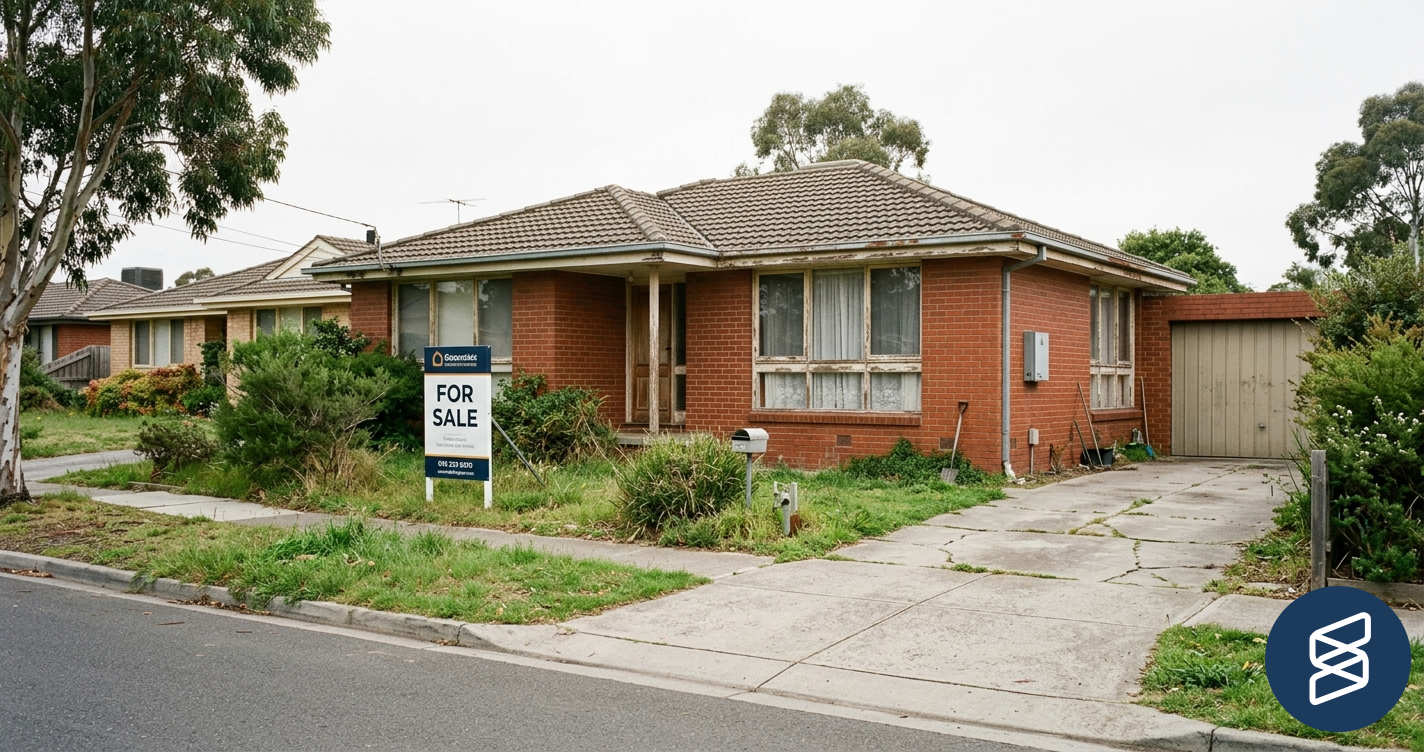
Something is about to change in the Australian property market, and it has implications for anyone buying a house in the next 18 months.
The 2026 federal budget abolished negative gearing on established investment properties for new arrangements from July 2027. It also removed the capital gains tax discount on established investment property gains. The full detail, and what it means for buyers more broadly, is in our 2026 budget breakdown. The short version: a meaningful number of investor-owned properties are expected to come to market between now and the changes taking effect, including a long tail of properties held since before 1985 that were previously exempt from CGT entirely.
That wave is not bad news for buyers. More established stock means more choice and, in many cases, more negotiating room. But it does mean the share of properties that have spent their recent life as rentals will rise. And ex-investment properties carry a specific maintenance pattern that owner-occupied properties do not.
This article is about what to look for in the building inspection when the house you are inspecting has been an investment for the last 10, 20, or 40 years. Many ex-rentals are perfectly fine. Some are a cosmetic refresh away from a great home. Others have years of deferred maintenance dressed up to sell. The building inspection is how you tell the difference.
Why ex-investment properties carry a different maintenance pattern
This isn't about investors being careless or dishonest. It's about how investment property economics work in Australia, and how those economics shape maintenance decisions over time.
A negatively geared rental property, by definition, costs the owner money each year. The tax structure makes the loss bearable. The owner claims interest, depreciation, agent fees, repairs and a long list of allowable expenses against their other income. The longer the property is held, the more the depreciation schedule winds down, and the more sensitive the owner becomes to additional cash outlays. By year 15 of a holding, most of the building's plant and equipment depreciation has been exhausted, and capital improvements no longer deliver the same tax shield they once did.
Add to this that a property manager's job is to keep the property rented. Maintenance is approved if it threatens the tenancy. Tenants notice failed hot water systems, blocked drains, broken locks, and obvious leaks. They don't generally notice slipped roof tiles on the rear elevation, sagging gutter brackets, rotting eaves, pier movement under the floor, or worn flashing around a flue. Those things still need fixing. They rarely get fixed in a rental.
The result is a maintenance bias toward the visible and the immediate. Bathrooms get re-grouted but not properly waterproofed. Showers get a fresh silicone bead rather than a screen replacement. Hot water systems are run until they fail rather than replaced when they're approaching end of life. Roof leaks are patched. Pest treatments lapse. Smoke alarms meet the bare legal minimum.
None of this is universally true. Plenty of investors maintain their properties well, particularly small-portfolio owners who treat the house as a long-term asset. But the building inspection is where the difference shows up, and it's worth knowing what to look for.
Where to focus the inspection on an ex-rental
A standard inspection under AS 4349.1 covers the whole property, but inspectors have to read hundreds of items and produce a report in a few hours. Some items get a paragraph, others a sentence. On an ex-investment property, these are the areas where a sentence is rarely enough.
The roof, gutters and downpipes. Tenants don't go on the roof. Property managers don't go on the roof. Most owner-investors haven't been on the roof of the property in years. This is the single most common area of deferred maintenance on ex-rentals. Look for slipped or cracked tiles, lifted ridge capping, rusted valleys, blocked or sagging gutters, downpipes that don't drain to anywhere obvious, and flashing around penetrations. If the inspector notes any of these and recommends a roof plumber follow-up, take the recommendation seriously. Walking away from a roof issue identified in a report is far cheaper than discovering it from inside the ceiling cavity 18 months in.
The subfloor. Tenants don't crawl under the house. If the property is on stumps or piers, the subfloor is one of the most under-inspected areas in a typical long-term rental. Look for evidence of pier movement, timber decay, signs of past pest activity, inadequate ventilation, and pooling moisture. The inspector's subfloor commentary on an ex-rental deserves a careful re-read.
Wet areas: kitchens and bathrooms. This is where cosmetic work covers structural issues. A bathroom that has been "recently refreshed" before sale (new tap fittings, fresh silicone, a new vanity, a new shower screen) but still sits on the same original waterproofing membrane, the same original substrate, and the same original tile bed is a common pattern. Look for descriptions in the report like "modern fixtures over older substrate" or "evidence of recent cosmetic work." A skim-deep refresh is not the same as a renovation, and the difference shows up in the inspector's wording.
Plumbing patches rather than repairs. Tenants get a plumber out to stop the leak. Owners renovate to remove the cause. Ex-rentals often carry a history of patches: replacement pipes in mismatched materials, taps swapped without replacing the seats, hot water service that's been topped up rather than fully serviced. Cross-reference the inspector's plumbing notes with the age of the building. A 1970s house with no record of major plumbing work, or one with visible repairs to different sections at different times, is worth a plumber's follow-up before settlement rather than after.
The hot water system. This sounds prosaic. It matters. Hot water systems are the single most common large appliance in a rental, and they're commonly run until they fail. A 12-year-old electric storage hot water system on an ex-rental is on borrowed time. The inspector will usually note the age and condition. If they don't, ask.
Smoke alarms and safety items. All states require working smoke alarms in rentals, and most require interconnected systems in new tenancies. But "compliant" means "passes the minimum check," not "well maintained." Check the inspector's commentary on smoke alarm age, type, and placement. Wired-in alarms have a 10-year life. If they're original to a 15-year-old build, they need replacing regardless of whether they currently beep.
Pest treatment history. Pest is governed by a separate standard (AS 4349.3) and a separate inspection. If you've only paid for a building inspection, termite activity is not within scope, and an ex-rental with no pest treatment records is exactly the kind of property where a separate pest inspection is non-negotiable rather than nice-to-have. We cover what's actually included in the combined building and pest inspection cost.
Eaves, fascias, and exterior timber. Owner-occupiers usually paint when they notice. Investors paint when the agent says the photos need to be re-shot. Long-term rentals tend to show patchy paint, weathered timber, lifting fascia boards, and rotted eaves in less visible spots: rear elevations, side passages, the part of the property not photographed for listings. These are flagged in inspection reports but easy to skim past.
The pattern that matters more than any single finding
A single "further investigation recommended" is normal. Most reports carry one or two, and following them up is part of a normal pre-settlement process. We cover what those recommendations actually mean in our explainer on further investigation in building inspections.
What's worth paying closer attention to on an ex-rental is the pattern. Four or five further-investigation items spread across systems (roof, subfloor, wet areas, electrical, pest) is not a coincidence. It's a signal of systematic deferred maintenance, and it suggests the property has been let to drift across multiple fronts at once.
That pattern is not a reason to walk away. It's a reason to do the follow-ups before settlement, ideally in parallel rather than sequentially, and to negotiate on the basis of the resulting reports rather than the original inspection alone. Vendors of ex-investment properties are often willing to do this, because the alternative is a buyer who pulls out and a market that's getting more crowded by the week.
How to use the inspection to negotiate
Ex-investment vendors are, on average, more financially driven and less emotionally attached than owner-occupiers. They are often selling because of a change in tax position, because the loan is no longer serviceable, or because the portfolio is being trimmed. They are not selling because they want to be in a smaller house with the grandchildren.
That makes evidence-based negotiation more likely to land. An offer reduction supported by specialist quotes (a roof plumber, a tile setter, a pest controller, a hot water specialist) reads differently from a price chip based on a vague feeling that the property "needs work." Vendors who are selling to avoid future costs understand future costs, and they can do the maths on whether your reduction is cheaper than relisting.
The full mechanics of structuring that conversation, including who to send the inspection to, what to attach, and what timing works best, is in our post-inspection negotiation guide. The principle is simple: ex-investment properties with documented deferred maintenance are the strongest negotiation scenario in Australian residential property. Use that.
The pre-1985 angle
There is a long tail of investment properties in Australia that has been held by the same owner since before 19 September 1985. Properties acquired before that date were exempt from capital gains tax under the rules that applied at the time, and many were bought as long-term yield assets and never sold.
Under the 2026 budget changes, the CGT exemption on those properties is phased out from July 2027. Some of those owners are now in their 70s and 80s, and many will choose to sell while the transitional rules are still favourable. That means a wave of properties built in the 1960s, 1970s, and early 1980s, held continuously by the same owner-investor for 40 years or more, will hit the market between now and 2028.
These properties carry a specific set of considerations. They are old enough to potentially contain asbestos in original wall sheeting, eaves, vinyl floor backings, and roofing. The original wiring is likely to be aluminium or early-PVC copper, and switchboards often haven't been upgraded to current standards. Lead paint is possible on pre-1970 properties. Original galvanised water pipes may still be in service. None of these are covered by a standard building inspection, but a good inspector will note "consider specialist follow-up for asbestos" or "switchboard appears original, recommend electrical inspection" where the property warrants it.
This is not a reason to avoid older ex-investment stock. Many of these properties are well built, structurally sound, on good blocks, and represent the kind of family-home opportunity that hasn't been available in some suburbs for decades. It is a reason to commission the specialist follow-ups the inspector recommends, and to budget for the upgrade work that a 40-year-rental will inevitably need. Our pre-settlement inspection checklist covers the timing of those follow-ups before contracts run out.
A note before you write off any ex-rental
Most of this article has been about what can go wrong. It's worth saying clearly that plenty doesn't. Many ex-rentals are well-maintained, well-tenanted, and were owned by small-portfolio investors who treated the house properly because they intended to hold it for life. The building inspection on those properties will read no worse than any other house in the suburb.
The point is that you can't tell which kind of ex-rental you're looking at from the listing photos, the open inspection, or the agent's commentary. Listings are designed to sell. The building inspection is the document that doesn't have a marketing incentive, and on an ex-investment property it carries more weight than it does on an owner-occupier sale.
Read it carefully. Re-read the limitations section. Commission the further-investigation items the inspector recommends. And then negotiate from a position of evidence, not anxiety.
If you're looking at an ex-rental right now
If you have a building inspection report in front of you for a property that's been let for the last decade or three, the questions to ask yourself are practical ones. How many items were flagged for further investigation, and across how many systems? Where is the inspector's wording soft (a single sentence) when the issue sounds significant? What's in the limitations section that you haven't followed up on yet? What does the cosmetic finish suggest about pre-sale presentation versus genuine maintenance?
A clear, plain-English breakdown of the report makes those questions far easier to answer. Snagger is built for exactly this. Upload the inspector's PDF and you get every finding sorted by severity, with the language unpacked, the questions to ask the vendor and your conveyancer surfaced, and the negotiation-relevant items highlighted. You can see what that looks like on a real sample report.
The inspection is the single most important document you'll read before settling on an ex-investment property. The earlier you understand it properly, the better the decision you can make about whether to buy, walk, or negotiate.
Looking at an ex-rental? Make sense of the report before you offer.
Upload your Australian building or pest inspection report and get every finding explained in plain English, severity rated, with the deferred-maintenance patterns surfaced. See exactly what's been let to drift and what's worth chasing before settlement.
Upload your reportSnagger is a comprehension aid only. This article is general information and does not constitute professional building, legal, or financial advice. Always consult a licensed building inspector, conveyancer, or other qualified professional before making any purchasing decision.
More articles

Should I get a building inspection before buying at auction in Australia?
Auctions in Australia are unconditional. Here's why a pre-auction building inspection matters, how to arrange one, and what to do if it finds problems.

First home buyer checklist Australia: from pre-approval to settlement
The full first home buyer journey, broken into stages with tickable checkboxes. From saving a deposit to settlement day, everything you need in order.
How many defects is too many in a building inspection?
Your building inspection report has 20 findings and you're wondering if it's a walk-away report. Here's how to sort signal from noise when the list is long.