
The 2026 budget and property: what the changes mean if you're buying a home in Australia

If you watched the Treasurer's budget speech on 12 May 2026 with a half-formed offer sitting in your inbox, you are not alone. The biggest tax change to Australian property in a generation landed on a Tuesday night, and by Wednesday morning every WhatsApp group with a first home buyer in it was asking the same question: what does this actually mean for me.
This article is not tax advice. It is a plain-English read on what changed, what it probably means for buyers, and why the practical implications matter more for the inspection on your next property than they do for your spreadsheet. If you want CGT calculations, talk to an accountant. If you want to know whether to keep buying and how to buy well from here, keep reading.
What actually changed on 12 May
The Treasurer announced two big tax changes affecting residential property.
Negative gearing on established residential property was abolished for purchases made after 7:30pm on 12 May 2026, with the change taking effect from 1 July 2027. Investors who already owned established properties before that cut-off are grandfathered, meaning they keep the existing rules indefinitely. New builds remain eligible for negative gearing.
The 50% capital gains tax discount was replaced with cost-base indexation plus a 30% minimum tax on real gains. Pre-1985 properties, which had previously been outside the CGT net entirely because CGT didn't exist when they were bought, are now subject to CGT for the first time when sold. Existing owners are grandfathered.
A few things to notice about this design. The changes target investors specifically, and they target future investor decisions. If you already own one rental property and you bought it in 2018, nothing has changed for you. If you live in your home, nothing has changed for you. If you are buying a home to live in, no new tax applies.
The practical question for buyers is not "how do I pay this new tax." It is "what happens to the property market when investors face a different set of incentives than they did last week."
What Treasury thinks will happen
Treasury's own forecasts, released with the budget papers, project the following over the decade after the changes take effect:
- House prices grow approximately 2% slower than they would have under the old rules. That is a slower growth curve, not a fall.
- Around 75,000 additional owner-occupiers enter the market over the decade. Many of these are first home buyers who were previously outbid by investors at auctions.
- Rents rise by less than $2 per week above the baseline. Treasury's modelling suggests the rental supply impact is small, partly because new builds remain incentivised and partly because grandfathered investors are not forced to sell.
Independent economists disagree on the size of these effects, as they always do. But the direction is broadly agreed: a small drag on prices, a small lift in owner-occupier participation, and a market that tilts slightly more towards buyers in the segments where investors were most active.
What this means if you're buying
If you are a first home buyer or an owner-occupier looking to upgrade, the changes affect you indirectly through supply and demand, not directly through tax.
More established properties may come to market. Some investors will rebalance their portfolios because the after-tax returns on established property are now less attractive. Treasury's modelling suggests this is a gradual shift rather than a fire sale, but in practice it means more "former rental" listings appearing on realestate.com.au over the next 12 to 24 months in suburbs where investor ownership was high.
Pre-1985 properties may be sold by long-term owners. Pre-1985 assets are now in the CGT net for the first time. Owners who were planning to sell anyway, and who held off because they thought their pre-1985 asset would always be CGT-free, may now decide that selling sooner makes sense. The flow-on effect is that some of the oldest housing stock in the country, the homes most likely to need significant work, may come to market in larger numbers than usual.
You face less competition at auction in investor-heavy suburbs. If you have been losing out on properties in suburbs where investor demand pushed prices above what a typical owner-occupier could justify, you may find yourself with fewer competing bidders from the second half of 2026 onwards. This is anecdotal so far, but agents in early reports are already noting fewer investor bidders at auctions.
None of this is a guarantee for any specific property in any specific suburb. National forecasts smooth over enormous local variation. But the overall shift is in your favour as a buyer, and the smart response is to use that shift well.
Why a buyers' market makes inspections more important, not less
There is a habit among first home buyers in hot markets of skipping or rushing the building inspection to look more competitive. "Cash offer, no conditions, 21-day settlement" was a common winning strategy in 2024 when stock was tight and investors were bidding alongside owner-occupiers. The logic was that any extra clause made your offer worse than someone else's.
That logic does not survive in a buyers' market. When sellers are competing for offers rather than the other way round, your conditions matter less to the outcome. The seller is not going to refuse a building and pest condition from the only buyer at the open home, especially on a property that has already been on the market for six weeks.
The shift gives you back something you've been short of: time and leverage. You can use the building inspection report to understand the property's actual condition rather than guessing from what the agent says. You can use the findings to negotiate. You can walk away if the report is genuinely bad without losing your deposit, because your contract gives you that right under a building and pest condition.
The properties most likely to come to market in this segment make inspections more important for two reasons.
Ex-investment properties often carry deferred maintenance. A long-term rental gets the work that has to be done, like fixing a hot water system, and rarely the work that should be done, like proper roof maintenance, gutter replacement, regrouting wet areas, addressing slow plumbing leaks. From a landlord's perspective, anything not visible to the tenant and not preventing rental income is easy to defer. From a buyer's perspective, that deferred work is now your problem.
Older housing stock has more risk per square metre. A 1965 weatherboard might be a beautiful home that has been lovingly maintained for fifty years. It might also have rising damp, asbestos, sub-floor structural movement, non-compliant electrical, lead paint, and a sewer line about to fail. The only way to know which version you are buying is a thorough inspection. We've written about what counts as a major defect and why pre-1985 properties tend to surface them in different patterns than newer builds.
The right play in a buyers' market is the opposite of skipping the inspection. It is insisting on a thorough one, treating the findings as a real negotiation tool, and being willing to walk if the report tells you to.
What ex-investment listings tend to look like
If you start looking at homes coming off long-term rental, you'll see some patterns repeat. Knowing them in advance helps you read the listing photos and the property realistically.
- Tired but not catastrophic finishes. Worn carpets, scuffed walls, dated kitchens, original bathrooms. These are cosmetic and obvious. They are not what to worry about.
- Hot water systems near end of life. Landlords replace these when they fail, not when they age. A 12-year-old electric storage tank in the laundry is on borrowed time.
- Gutter and roof neglect. Tenants don't clean gutters and rarely report a slipped tile. Roof maintenance is often the most common deferred item on long-term rentals.
- Slow plumbing leaks. Drips under sinks, weeping toilet cisterns, slightly damp vanities. Often masked by recent quick cosmetic work before sale.
- Stove, oven, and rangehood at the cheapest spec. Landlord-grade appliances are functional rather than durable. Replacement is usually due within a few years.
- Outdoor and timber decay. Decks, pergolas, fences, and external timber rarely get attention on rentals until they fail.
The pattern is rarely catastrophic, but it is rarely negligible either. A typical ex-rental three-bedder might carry $15,000 to $40,000 of work that the previous landlord ignored. That number is exactly what a building inspection is for: turning a vague sense that the place feels neglected into a specific list with a specific repair scope.
How to use the buyers' market well
If the market is tilting in your direction, here are the practical moves to make on your next purchase.
Get the inspection done properly, not cheaply. A $400 inspection that takes 45 minutes and produces a generic checklist is worth roughly $400 of information. A $700 inspection from a building consultant who spends two hours on the property, runs moisture meters in wet areas, gets into the roof cavity, and writes a detailed report is worth ten times more. In a buyers' market, the inspection is your most important due diligence tool. Don't skimp.
Use the report to negotiate, not just to decide. Most inspection reports surface enough material for a serious negotiation. Critical and major defects with written tradie quotes are the strongest currency. Vendors in a buyers' market are far more willing to engage with a price reduction or rectification request than they would have been at the peak. Our negotiation guide walks through how to build the case.
Don't waive conditions to look competitive. This was a useful tactic in 2022 to 2024. It is not a useful tactic now. Keep your building and pest condition. Keep your finance condition. Keep your cooling-off where it applies. Those clauses exist to protect you and the seller's market position has changed enough that you can usually keep them without losing the property.
Don't confuse "cheap" with "good value". A 1970s ex-rental selling 8% below what equivalent properties sold for in 2024 is not automatically a bargain. If the inspection turns up $60,000 of structural and compliance work, you may have paid too much even at the lower price. The right way to read price changes is in the context of the inspection findings, not in isolation.
Use the pre-settlement inspection. Even after you've negotiated and exchanged, you have one more chance to check the property's condition before money changes hands. A pre-settlement inspection catches anything that has changed between the building and pest inspection and settlement day. On ex-rental and recently-vacated properties, this matters more than usual because the property may have been cleared of furniture in the meantime, revealing damage that was previously hidden.
A practical checklist before your next offer
If you're shopping post-budget, run through this list before signing anything.
- Confirm the property's recent history. Was it a long-term rental? A renovation flip? An owner-occupied home of fifteen years? The history tells you what to look for.
- Engage an experienced building and pest inspector early. Book before you make your offer in states where inspections happen pre-exchange. Book within the condition deadline in states where they happen post-exchange.
- Read the full report, not just the summary. Reports often bury serious findings in the body and soften the executive summary. We've written about why inspectors sometimes miss things and what to push back on.
- Get specialist quotes for the major findings. Structural engineer, licensed plumber, licensed electrician, pest controller. Written quotes give your conveyancer something concrete to negotiate with.
- Decide on your outcome. Are you asking for a price reduction, vendor rectification, or a credit at settlement? Know what you want before the negotiation starts.
- Let your conveyancer run the formal negotiation. Don't argue with the agent. The formal letter from your legal representative carries the weight.
The market just changed. The fundamentals of buying a home well did not. A property that looks right, on a street that suits you, in a condition you understand and can afford to maintain, is still a good buy. A property that looks tired, on a street that has unexplained appeal, in a condition you don't understand, is still a bad buy. The Budget didn't change that. It just gave you a bit more room to do the homework.
Making sense of your inspection report
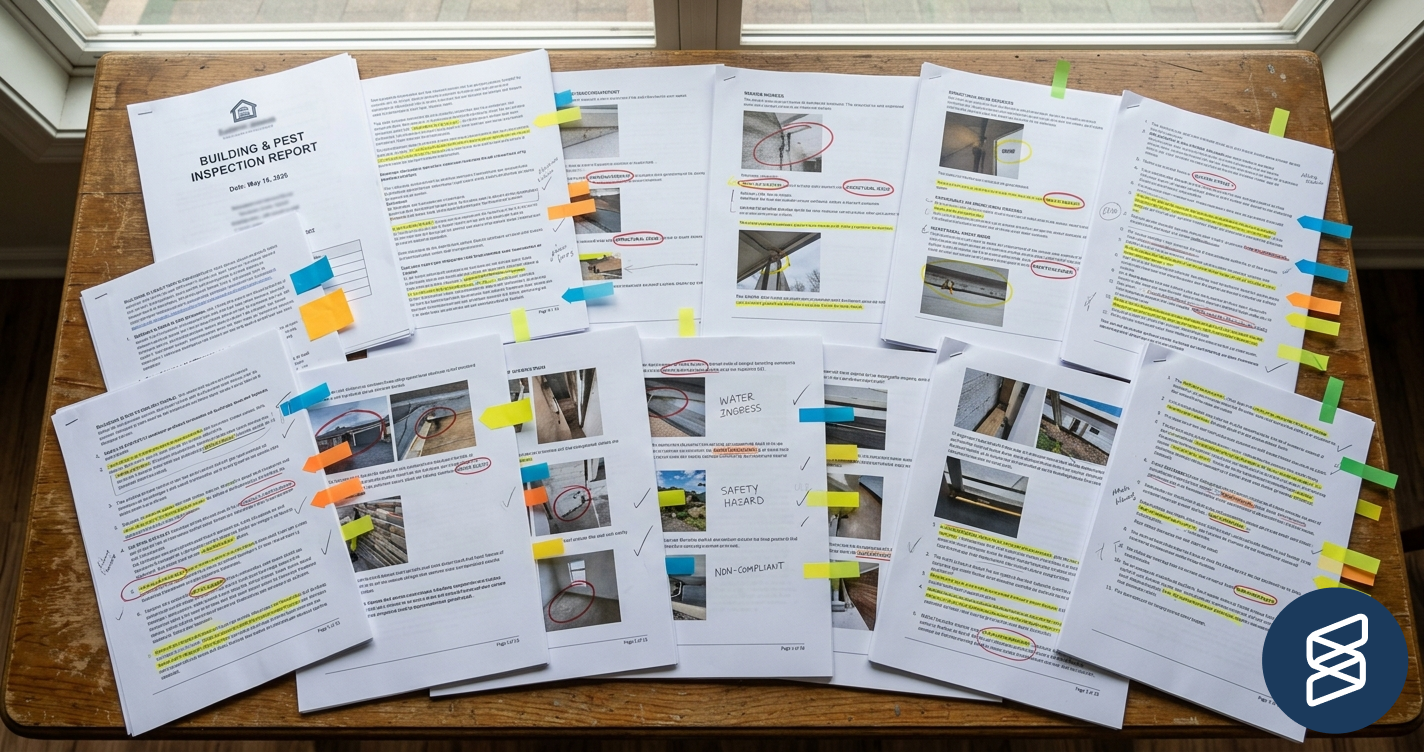
The hardest part of the next 12 months for buyers will not be finding properties to look at. It will be reading what the inspectors are telling you and deciding which findings are deal-breakers, which are negotiation fodder, and which are normal age. If your report comes back full of jargon and you're not sure how to triage 40 listed items, Snagger reads the report and breaks it down: every finding explained in plain English, severity rated, and sorted into action categories. You can see what that looks like on a real report here.
The Budget shifted the market in the buyer's favour. Use that shift with proper information, not without it.
Buying in a shifting market? Read the report properly.
Upload your Australian building or pest inspection report and get every defect explained, rated by severity, and sorted into what to negotiate, what to fix, and what to walk away from. Use the buyers' market with the full picture, not half of it.
Upload your reportSnagger is a comprehension aid only. This article is general information and does not constitute professional building, legal, or financial advice. Always consult a licensed building inspector, conveyancer, or other qualified professional before making any purchasing decision.
More articles

Should I get a building inspection before buying at auction in Australia?
Auctions in Australia are unconditional. Here's why a pre-auction building inspection matters, how to arrange one, and what to do if it finds problems.

First home buyer checklist Australia: from pre-approval to settlement
The full first home buyer journey, broken into stages with tickable checkboxes. From saving a deposit to settlement day, everything you need in order.
How many defects is too many in a building inspection?
Your building inspection report has 20 findings and you're wondering if it's a walk-away report. Here's how to sort signal from noise when the list is long.