
Can you negotiate the price after a building inspection in Australia?
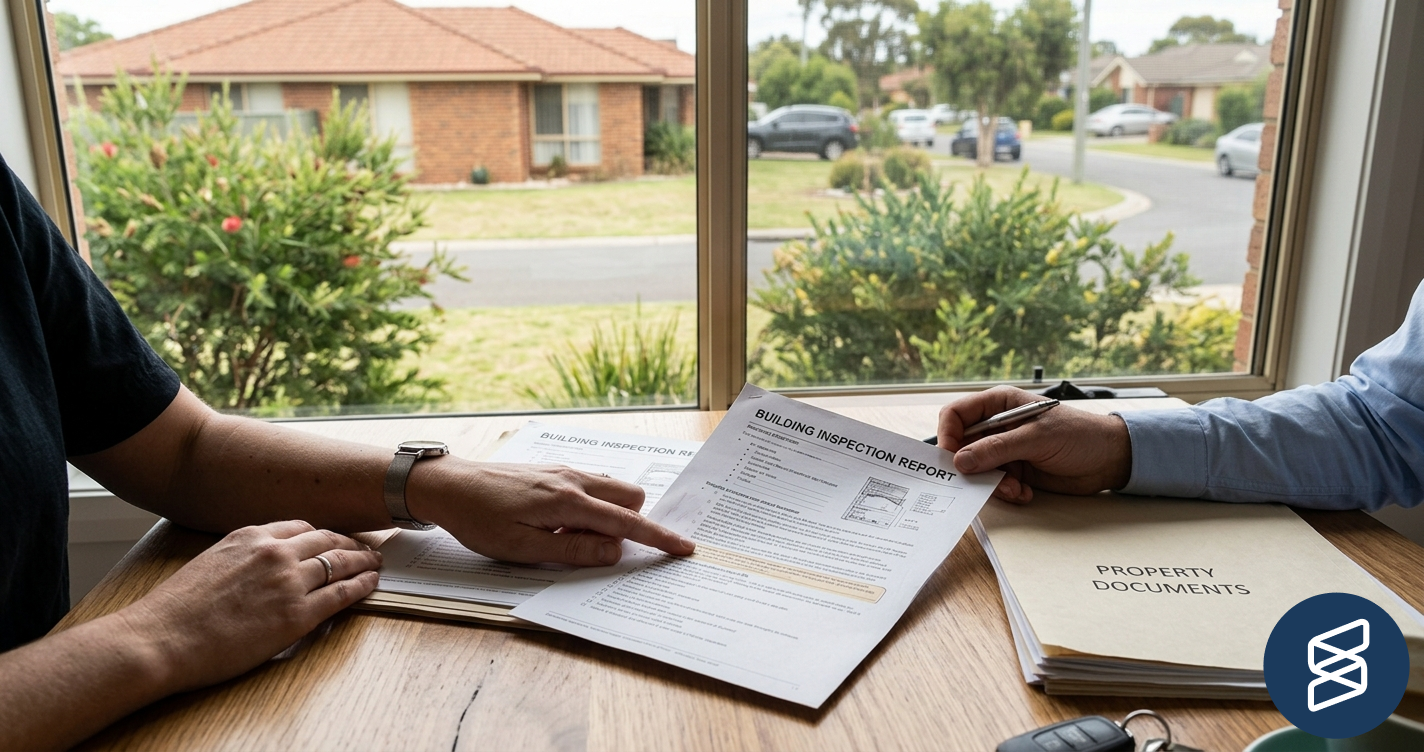
Your building inspection came back and the report has problems. Maybe it's a major defect on the deck framing. Maybe the inspector recommended further investigation on the plumbing. Maybe there are five moderate items and two critical ones and you're sitting there at 10pm wondering whether you should still buy this house, and if so, whether you should be paying the same price you offered before you knew about any of this.
The answer to that second question is almost always no. You should not be paying the same price, and you have legitimate grounds to renegotiate. But how you do it matters as much as whether you do it.
Yes, you can negotiate. And it's normal.
First home buyers often feel awkward about raising the inspection report with the vendor. It feels like you're accusing someone of hiding problems, or like you're trying to squeeze them after they've already accepted your offer.
It's neither of those things. Building inspections exist specifically for this purpose. The entire point of a building and pest condition in your contract is to give you the right to assess the property's condition and respond accordingly. Vendors know this. Agents know this. Conveyancers handle it every week.
Raising findings from the inspection report is not adversarial. It's the process working as it's designed to.
What gives you leverage (and what doesn't)
Not every finding in an inspection report is worth negotiating over. If you go to the vendor with a list of 15 items including cracked tiles in the bathroom and a squeaky floorboard, you'll lose credibility on the items that actually matter.
Strong negotiation leverage:
- Major defects classified as "before settlement" items. Structural cracking, failed deck framing, non-compliant plumbing, active termite damage. These are the findings that any reasonable buyer would expect to be resolved or priced in.
- Items the inspector flagged for further investigation that a specialist has now confirmed as genuine problems, with a written scope and a quote.
- Safety issues. Loose balustrades, substandard handrails, faulty electrical, non-compliant pool fencing. Anything that poses a physical risk.
- Non-compliant work. Unapproved additions, unpermitted renovations, work that doesn't meet the Building Code. These can create legal and insurance problems for the new owner.
Weak or no leverage:
- Cosmetic items. Peeling paint, worn carpet, dated finishes. These are visible at the open home. You knew about them when you made the offer.
- Age-related wear on an older property. A 1960s weatherboard with original windows and slightly uneven floors is not defective. It's old. The inspector might note it, but the vendor will rightly argue it was obvious before you offered.
- Items you've already been told about. If the vendor disclosed a known issue in the contract of sale or section 32 (in Victoria) and you offered anyway, you've already priced it in.
- Minor maintenance. Blocked gutters, garden maintenance, tired sealant. These are ownership costs, not defects.
The general rule: if a reasonable person could have seen the issue at the open home without a trained inspector, it's weak leverage. If it took a professional inspection to find it, it's strong.
How much can you expect to negotiate off after a building inspection?
Price reductions after building inspection findings typically range from 1% to 5% of the purchase price for moderate defects, and 5% or more for serious structural issues. On a $700,000 purchase, that is $7,000 to $35,000 across those bands - but the actual number is always anchored to what the repairs cost, not to what you would like to pay for the property.
Vendors do not agree to reductions based on opinions. A licensed builder's written quote for $12,500 to replace defective deck framing gives your conveyancer something concrete to present. "The deck looked bad to us" gives them nothing. The more directly you can connect the requested reduction to the documented cost of rectification, the more likely the vendor is to engage rather than refuse.
Some vendors prefer to rectify rather than reduce the price. From a dollar perspective the outcome is similar, but the path differs - and as the buyer you lose control over the quality and timing of the work. If a vendor offers to rectify, ask your conveyancer to include a condition that the work be completed to a standard satisfactory to your inspector before settlement, with a reinspection arranged.
Cosmetic items rarely result in reductions. Structural defects, compliance failures, safety issues, and active pest damage are where reductions and rectification requests stick.
The three outcomes you're aiming for
When you negotiate after a building inspection, you're pushing for one of three things. Know which one you want before you start.
1. Vendor rectifies before settlement.
You ask the vendor to fix the defect before you take ownership. This works best for clearly defined, single-trade issues: replace the deck, fix the non-compliant plumbing, treat the active termites, repair the roof leak.
The upside: you move in with the problem solved. The downside: you have no control over the quality of the repair. The vendor will hire the cheapest tradie they can find, and the work may be adequate rather than excellent. If you go this route, insist on seeing the completion certificate or a sign-off from the relevant trade, and have your inspector or a specialist verify the repair before settlement.
2. Price reduction.
You ask for the purchase price to be reduced by the estimated cost of rectification. This is the most common outcome and usually the cleanest. You get a lower price, and you control the repair quality and timing after settlement.
This works best when you have a written quote from a licensed tradie. A builder's quote for $8,500 to replace the deck framing is a concrete number the vendor can respond to. "The deck is bad" is not.
3. Vendor credit at settlement.
Instead of reducing the purchase price, the vendor provides a credit (sometimes called an "adjustment") at settlement. The practical effect is the same as a price reduction, but the contract price stays unchanged. This can matter for stamp duty calculations in some states, because stamp duty is calculated on the contract price, not the adjusted settlement amount. Ask your conveyancer whether this distinction matters in your state.
How to build your case
The quality of your negotiation depends entirely on the quality of your evidence. Renegotiating the price works when you walk in with numbers, not opinions. Here's how to put it together.
Step 1: Identify the items worth negotiating.
Go through the building inspection report and pull out every finding classified as critical or major, plus anything flagged for further investigation. Ignore the minor and cosmetic items. You want a short, focused list of genuine issues, not a long list padded with complaints.
Step 2: Get specialist quotes for the major items.
For every critical or major finding, engage the relevant licensed trade to inspect and quote:
- Structural cracking or movement: structural engineer
- Deck, framing, or carpentry issues: licensed builder
- Plumbing or drainage: licensed plumber
- Electrical: licensed electrician
- Termites or pest damage: licensed pest controller
- Roof issues: licensed roofer
- Rising damp: damp specialist
Each specialist should provide a written quote or scope of works. This is the document your conveyancer attaches to the negotiation letter. Without it, you're negotiating with opinions. With it, you're negotiating with numbers.
Step 3: Decide what you're asking for.
Before your conveyancer sends anything, decide which of the three outcomes you want. Are you asking the vendor to fix it? Asking for a price reduction? Asking for a credit? Your conveyancer will advise which approach is strongest given your contract and your state's conventions, but they need to know what you want.
Step 4: Let your conveyancer handle the formal request.
Your conveyancer (or solicitor) drafts a letter to the vendor's legal representative. The letter typically includes:
- A summary of the inspection findings (with the report attached)
- The specialist quotes (attached)
- A specific request: rectification, price reduction of $X, or credit of $X
- A deadline for response, usually tied to your contract's building and pest condition deadline
You do not send this letter yourself. You do not discuss it with the agent directly (unless your conveyancer advises otherwise). The formal channel protects you legally and keeps emotions out of it.
What to expect from the vendor's response
Vendors respond in one of four ways. Knowing them in advance stops you from panicking or overreacting.
They agree. This is more common than you'd think, especially when the request is reasonable and backed by quotes. A vendor who knows about a $6,000 plumbing issue would rather reduce the price than risk the buyer walking away and having to disclose the issue to the next buyer.
They counter-offer. The vendor agrees there's a problem but proposes a lower figure or a different remedy. This is normal. Your conveyancer negotiates the middle ground. The counter-offer is usually where you land.
They refuse. The vendor says no. Now you have a decision: proceed at the original price knowing the defects, or exercise your right to terminate under the building and pest condition (if your contract has one and you're still within the deadline). Your conveyancer advises on whether termination is available and what it means for your deposit.
They ignore you. Silence is effectively a refusal. If the condition deadline passes without a response, your conveyancer will advise on next steps. In most states, the buyer's rights under a building and pest condition are time-limited, and silence doesn't extend the deadline.
When you might withdraw your offer instead of negotiating
Not every inspection result is a negotiation. When defects are serious enough - structural failures, active termite infestation throughout the framing, non-compliant work that would require major remediation to legalise - withdrawing your offer is a legitimate outcome, not a failure. Walking away from the wrong property is the building and pest condition doing its job.
Whether you can withdraw, and how, depends on your contract and your state.
- Queensland gives the clearest rights. Standard Queensland contracts include a building and pest condition with a specified deadline. Within that deadline, you can terminate the contract and receive your deposit back if the inspection reveals unsatisfactory results. This is the most buyer-friendly state for withdrawing after inspection.
- Victoria has a cooling-off period of three business days on private sales (not auctions). Building and pest conditions are commonly included in contracts of sale. If you are within the cooling-off period or the building and pest condition deadline, withdrawing is straightforward. Auctions have no cooling-off.
- New South Wales typically requires the inspection to be done before exchange, not after. If you have already exchanged and then discover issues, your withdrawal options are much more limited. Get the inspection done before exchange.
- Western Australia depends on whether your contract includes a building and pest condition. If it does not, withdrawing your offer is a request rather than an exercise of contractual rights - the vendor can decline. Ask your conveyancer before you make the offer whether a condition should be included.
- South Australia has a two-day cooling-off period on private sales, which provides some withdrawal rights.
Your conveyancer handles the withdrawal formally - not you directly, and not through the agent. Deposit refund depends on contract terms and state rules, and your conveyancer advises on what applies to your situation.
State-by-state differences
The negotiation mechanics vary slightly by state because contracts differ.
Victoria. Cooling-off applies to most private sales (not auctions). Building and pest conditions are commonly included in the contract of sale. The Section 32 vendor statement must disclose known issues, and anything not disclosed can strengthen your negotiation. Negotiate through your conveyancer to the vendor's solicitor.
New South Wales. Cooling-off is five business days after exchange (not auctions). Building and pest inspections are usually done before exchange, meaning you make your decision before signing. If you've already exchanged and then discover issues, your options are more limited. Get the inspection done before you exchange, not after.
Queensland. Contracts commonly include a building and pest condition with a specific deadline (often 7-14 days). If the inspection reveals issues, you can terminate within the condition period or negotiate. The buyer's building and pest condition clause gives you clear rights here.
Western Australia. Building and pest inspections are less standardised in contracts. Some contracts include specific conditions, others don't. If yours doesn't have a building and pest clause, your negotiation is a request rather than an exercise of contractual rights. Ask your conveyancer before you make the offer whether a condition should be included.
South Australia. Cooling-off applies (two business days, extendable). Building and pest conditions are standard practice. Negotiate through your conveyancer in the usual way.
In every state, the contract is king. Your conveyancer reads the contract, identifies your rights, and advises on what's available. Don't assume what applies in one state applies in another.
Common mistakes to avoid
Asking for too much. If the inspection found $12,000 worth of genuine defects and you ask for a $40,000 reduction, the vendor will ignore you. Ask for what the quotes support, not what you wish the house cost.
Being vague. "The report was bad and we want a reduction" is not a negotiation. It's a complaint. Specificity wins: "Three critical items totalling $14,200 in quotes from licensed trades, requesting a price reduction of $14,200."
Going around the conveyancer. Calling the agent to complain about the report might feel proactive, but it can weaken your legal position. The formal channel exists for a reason. Use it.
Leaving it too late. Building and pest condition deadlines are real. If your deadline is Friday and you haven't engaged a specialist by Wednesday, you may run out of time. Start the specialist inspections the day you get the report, not the day before the deadline.
Walking away over minor items. If the house is right and the location is right and the major issues are quantifiable and fixable, walking away over cosmetic defects is usually the wrong call. Use the report as a negotiation tool, not as a reason to abandon a property you want.
If you need help understanding what to negotiate
The hardest part of negotiating after a building inspection isn't the negotiation itself. It's figuring out which findings are actually serious, which ones are cosmetic, and which ones give you real leverage. If your building inspection report is full of jargon and you're not sure which items to bring to the table, Snagger breaks it down for you. Every finding explained, severity rated, and sorted into negotiation buckets. See what that looks like on a real report.
The report has your leverage in it. You just need to know which parts to use.
Need to negotiate after your inspection?
Upload your Australian building or pest inspection report and get every defect explained, rated by severity, and sorted into negotiation categories. See exactly which items give you leverage.
Upload your reportSnagger is a comprehension aid only. This article is general information and does not constitute professional building, legal, or financial advice. Always consult a licensed building inspector, conveyancer, or other qualified professional before making any purchasing decision.
More articles

Should I get a building inspection before buying at auction in Australia?
Auctions in Australia are unconditional. Here's why a pre-auction building inspection matters, how to arrange one, and what to do if it finds problems.
First home buyer checklist Australia: from pre-approval to settlement
The full first home buyer journey, broken into stages with tickable checkboxes. From saving a deposit to settlement day, everything you need in order.
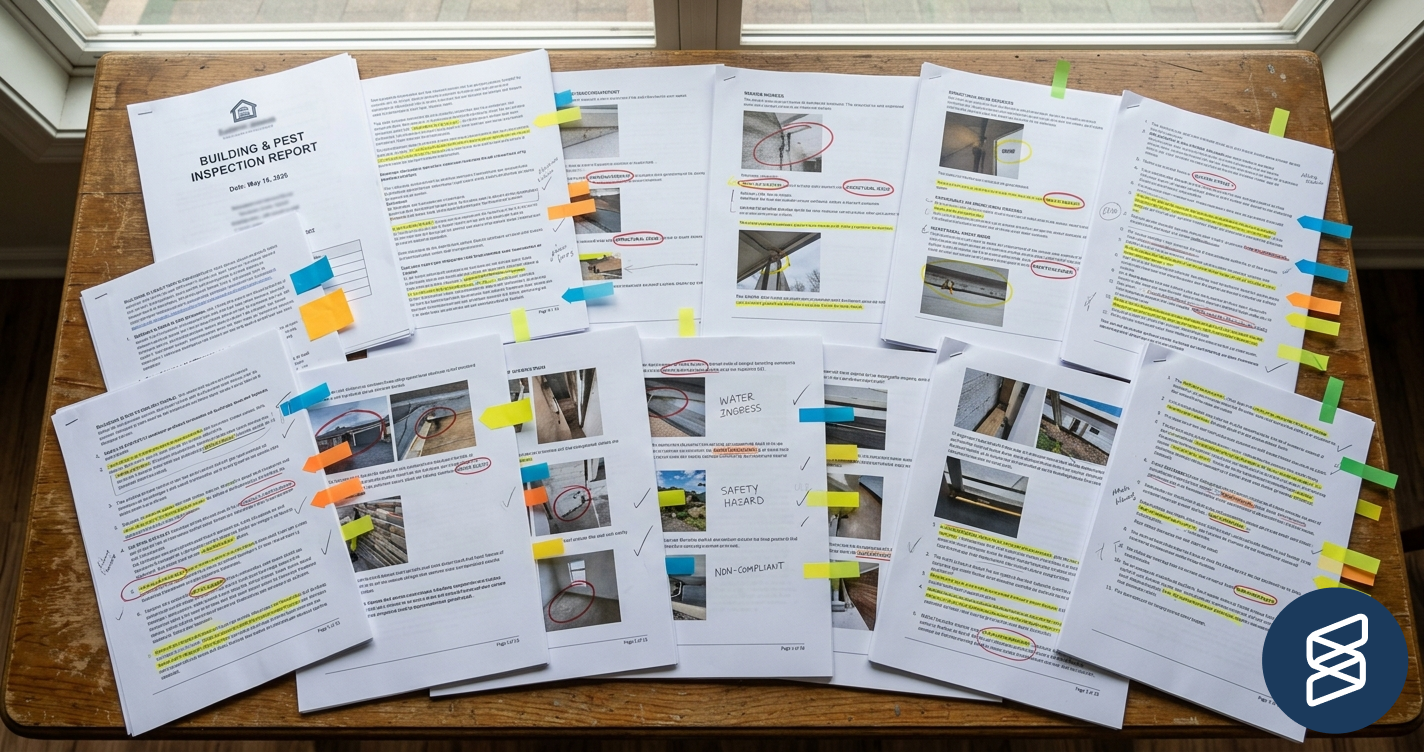
How many defects is too many in a building inspection?
Your building inspection report has 20 findings and you're wondering if it's a walk-away report. Here's how to sort signal from noise when the list is long.