
Should I get a building inspection before buying at auction in Australia?
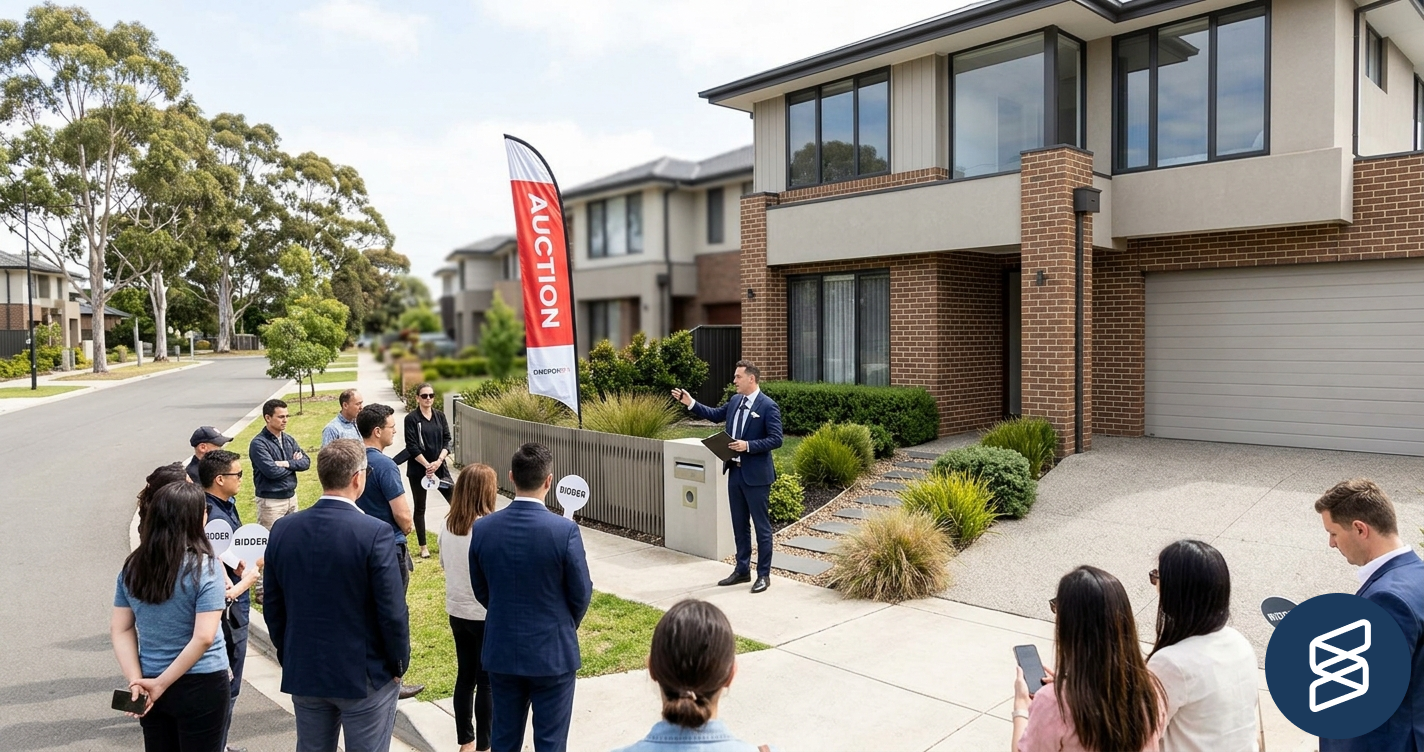
The hammer falls. You raise your paddle one last time, the auctioneer points at you, the room cheers, and the agent walks over with the contract. You sign. You pay the deposit on the spot. There is no cooling-off period. There is no building and pest clause. The next morning you discover the property has active termites in the bearers and a section of the brickwork is moving away from the wall.
That's the auction problem in one paragraph. In Australia, auction contracts are unconditional. The moment the hammer drops, you own whatever the property is, problems included. The only way to know what you're bidding on is to inspect before you bid.
Why auctions are different from private treaty
In a private treaty sale, you make an offer, the vendor accepts, and you exchange contracts with a building and pest condition built in. That condition gives you a window, usually 7 to 14 days, to inspect the property and respond to what you find. If the report reveals serious problems, you can negotiate the price down, ask the vendor to rectify, or terminate the contract and get your deposit back.
Auctions strip all of that away.
When you bid at auction and win, the contract is exchanged on the spot. You pay the deposit (usually 10%) immediately. There is no cooling-off period, in any state, on auction purchases. Even Victoria and South Australia, which have cooling-off rights on private treaty sales, exclude auctions from those rights. There is also no standard building and pest condition. Auction contracts are deliberately structured to be final.
This is not a technicality. It is the whole point of auctions from the vendor's perspective. The vendor wants certainty: a sale that completes without conditions, contingencies, or last-minute renegotiation. The buyer accepts that risk in exchange for the chance to compete openly.
If you bid uninformed, you are accepting a property's condition sight unseen by anyone qualified to assess it. Inspectors find things that visible at the open home does not. Active termite damage in subfloor framing. Substandard deck construction. Roof leaks that have been painted over. Non-compliant electrical work. Structural movement in load-bearing walls. None of these are visible to a buyer wandering through on a Saturday morning.
The honest cost question
The hardest part of pre-auction inspections is the sunk-cost problem. You might spend $600 on an inspection for a property someone else wins. That money is gone. You can't recover it.
For a single property auction, the maths is straightforward. A licensed building and pest inspection in Australia costs $400 to $700, and the upside is that you bid with full knowledge of what you're buying. The downside is the $600 if you don't win. Most buyers accept that trade.
The harder version is when you're attending multiple auctions. If you're bidding on three properties over two weekends, that's potentially $1,800 in inspections for one purchase. At that point, buyers usually adopt one of two strategies:
Inspect everything you'd genuinely bid on. If your bidding ceiling on a property is $850,000, the inspection cost is well under 0.1% of that number. Treat it like a transaction cost and budget for two or three inspections per purchase.
Inspect only when you're the leading interested party. Talk to the agent the week before each auction. Ask honestly where their interest is coming from, how many people have requested contracts, and how many serious bidders are expected. If you're clearly a long shot, skip the inspection. If you're one of two or three serious parties, do it.
Either approach is defensible. What is not defensible is bidding on properties worth half a million dollars or more without any qualified assessment of their physical condition. The cost of one bad purchase, in repair bills alone, exceeds the cost of inspecting every property you ever consider.
How to arrange a pre-auction inspection
Pre-auction inspections work the same as any other building and pest inspection, with two differences: timing matters more, and the agent needs to be looped in.
1. Contact the selling agent and request access.
Tell the agent you want to engage a licensed building and pest inspector before the auction. Most agents will accommodate this, often by scheduling the inspection during a planned open or arranging private access. Some vendors limit access to weekdays. A few are stricter, but a firm "no" to any inspection access before auction is a warning sign in itself.
2. Book the inspector early.
Good inspectors get booked out in busy auction seasons, particularly in Melbourne and Sydney where weekend auction volumes are high. Once you've identified a property you'd bid on, book the inspection as soon as the agent confirms access. Aim for the inspection to happen at least 5 to 7 days before auction day so you have the report well in advance.
3. Ask the inspector to flag auction-relevant items specifically.
Tell your inspector you are buying at auction and need to know about anything that would change your bid. Most inspectors will already prioritise this in their report, but it's worth saying explicitly. Structural issues, active pest damage, non-compliant work, safety problems, and major capital costs are the items that should anchor your bid limit. Cosmetic and maintenance items matter less in the auction context because you can address them after settlement.
4. Read the report properly.
Inspection reports are dense, jargon-heavy, and not written for buyers. Block out an hour to read yours carefully. Identify which findings are major defects and which are minor maintenance items. If the report flags anything for further investigation by a specialist, decide whether you have time to commission that investigation before auction day, or whether the uncertainty itself is a reason to lower your bid or walk away.
If you're not sure how to read the report, our building inspection report explained article walks through the structure and what each section means.
What to do if the inspection reveals problems
This is where pre-auction differs sharply from post-inspection negotiation in a private treaty sale. You can't go back to the vendor and ask for a price reduction. The auction has not happened yet, and even if it had, the contract gives you no leverage.
What you can do is adjust your bidding strategy. There are three responses to a problematic inspection report.
Lower your bid ceiling.
This is the most common response. If the inspection finds $25,000 of structural rectification work, lower your maximum bid by at least $25,000. If it finds $80,000 of major defects, lower it by $80,000. You can still buy the property, but you'll only buy it if the price reflects the actual condition.
The risk is that other bidders, who didn't inspect, push the price above your adjusted ceiling. They are taking on the defects unknowingly. You should let them, and walk away on auction day if it goes above your number.
Bid at the original ceiling and absorb the cost.
If the property is right (location, layout, school zone, whatever your reasons are) and the defects are quantifiable and fixable, you can decide to bid at your original ceiling anyway and treat the rectification costs as part of the total acquisition price. This is a personal call. It only works if the defects are limited, quoted, and within your budget to fix.
Walk away.
If the inspection reveals serious structural problems, widespread termite damage, asbestos in poor condition, or compliance failures that would require major remediation, walking away is a legitimate outcome. The inspection has done its job. You spent $600 and saved yourself the much larger cost of buying a property you cannot afford to fix.
There's a fourth, more aggressive option some buyers use: take the inspection findings to the agent before auction day and try to negotiate the property out of auction entirely, into a pre-auction private treaty sale with conditions. Vendors sometimes accept this, particularly if they suspect the auction will be quiet. It is worth a phone call to the agent if the findings are substantial.
What happens if you skip the inspection entirely
Plenty of buyers do skip it. They look at the property at the open home, like what they see, and bid on auction day with no qualified assessment of the physical condition. Some of them get lucky. Many do not.
The risks of skipping a pre-auction inspection are real and recurring:
- Active termite damage in framing, bearers, or roof timbers, often invisible without lifting access panels or inspecting subfloor areas.
- Structural movement in load-bearing walls or footings, sometimes disguised by recent paint or rendering.
- Roof and gutter problems, including water damage that has been patched cosmetically.
- Non-compliant electrical work, including unlicensed alterations and inadequate safety switches.
- Asbestos in poor condition, particularly in homes built before 1990.
- Substandard renovations and additions without council approval, which can cause legal and insurance problems for the new owner.
- Plumbing and drainage failures, including failed waste pipes and corroded copper supply lines.
If any of these turn up in the week after you've bought, you have no recourse. The agent and vendor have no further obligation to you. Your conveyancer will tell you the contract is binding. Your only option is to pay for the repairs yourself, on top of the mortgage you've just signed up to.
State-by-state: where auctions matter most
The mechanics of auction contracts are similar across states, but auction volumes are not.
Victoria. Auctions are dominant, particularly in metropolitan Melbourne. Saturday auction days are a fixed feature of the market. The Section 32 vendor statement must disclose certain known issues, but it doesn't replace a building inspection. Cooling-off rights do not apply to auction purchases in Victoria.
New South Wales. Auctions are common, particularly in Sydney. NSW law has no cooling-off period on auction purchases, and no standard building and pest condition. Inspections must be done before the auction. Some buyers also arrange a strata report in advance if the property is an apartment.
Queensland. Auctions are used but private treaty sales dominate. Standard Queensland contracts on private treaty include a building and pest condition, which auction contracts do not. If you're bidding at auction in Queensland, you lose the rights you'd otherwise have under the standard contract.
Western Australia. Mostly private treaty. Auctions exist but are relatively rare. When they do happen, the same unconditional rules apply.
South Australia. Mostly private treaty with cooling-off rights on private sales. Auctions exclude those cooling-off rights.
The national rule is consistent: if you buy at auction, you cannot include conditions. The only difference between states is how often you'll encounter auctions in the first place.
The emotional pressure of auction day
Pre-auction inspections do something less obvious: they protect you from yourself.
Auction days are designed to push buyers past their planned limits. The auctioneer's job is to drive bidding up. Other interested parties create urgency. The fear of losing the property to someone else collides with the cost of bidding higher. Buyers who arrive without a clear ceiling almost always pay too much.
A pre-auction inspection gives you something concrete to hold onto. You know what the property is worth. You know what the major defects are. You know what your bid ceiling is and why. When the auction goes above that number, you stop, because you've already done the analysis. If you'd skipped the inspection, your ceiling would be a gut feeling, and gut feelings get blown apart at auction.
Set your bid limit the night before the auction. Write it down. Tell your partner or a friend. Decide in advance that you will not go above it for any reason. The inspection report is what makes that ceiling real.
If you want a clearer read on a pre-auction inspection report
Pre-auction inspections are the highest-stakes inspections you'll ever commission. You have a few days to read the report, decide what matters, and set a bid limit. Most reports are written for inspectors and lawyers, not buyers, and the language can be hard to parse under that time pressure.
Snagger takes your Australian building or pest inspection report and breaks it down into plain English. Every finding rated by severity, every major defect explained, every item sorted by urgency so you can set your bid ceiling with confidence. See what that looks like on a real report.
The report has the information. We make it usable in the time you actually have.
Bidding at auction this weekend?
Upload your pre-auction building and pest report and get every defect explained, rated by severity, and sorted by urgency. Set your bid ceiling with the full picture, not a guess.
Upload your reportSnagger is a comprehension aid only. This article is general information and does not constitute professional building, legal, or financial advice. Always consult a licensed building inspector, conveyancer, or other qualified professional before making any purchasing decision.
More articles
First home buyer checklist Australia: from pre-approval to settlement
The full first home buyer journey, broken into stages with tickable checkboxes. From saving a deposit to settlement day, everything you need in order.
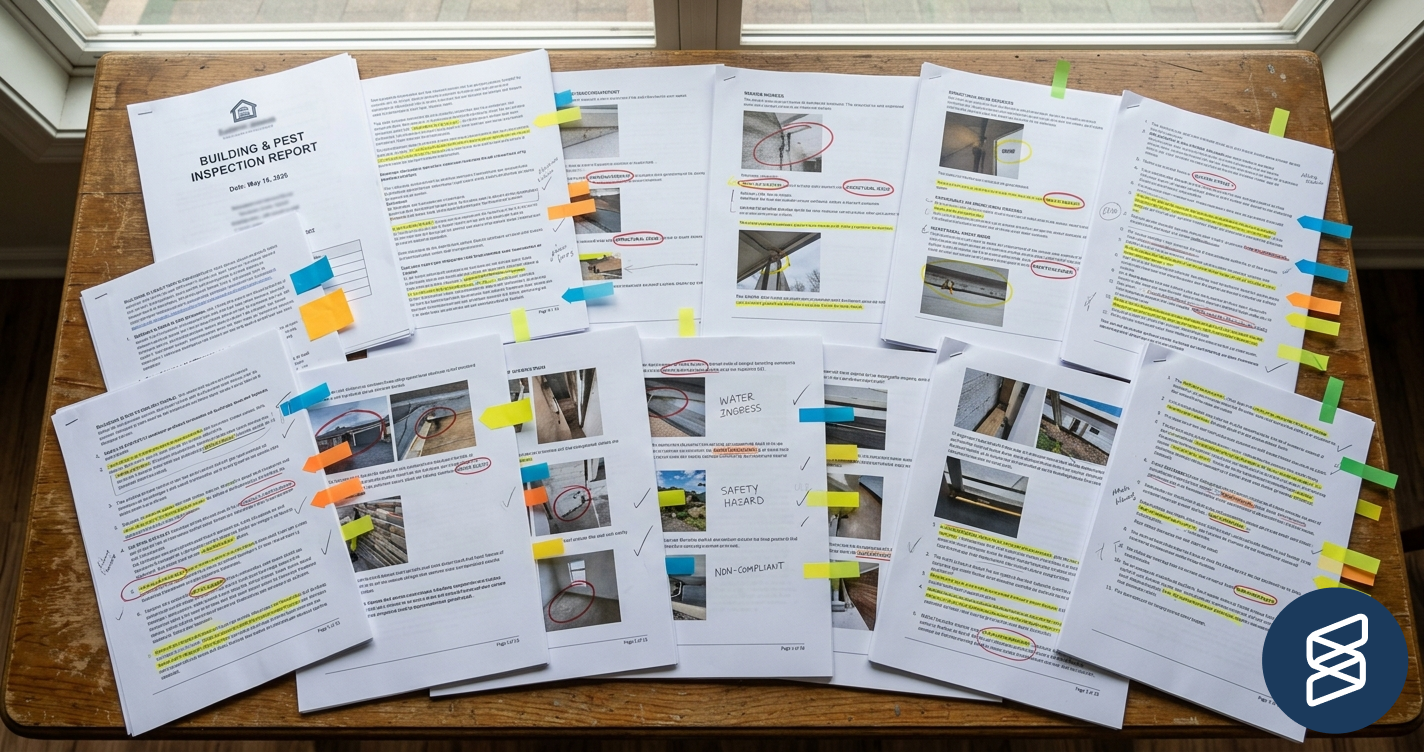
How many defects is too many in a building inspection?
Your building inspection report has 20 findings and you're wondering if it's a walk-away report. Here's how to sort signal from noise when the list is long.

The 2026 budget and property: what the changes mean if you're buying a home in Australia
The 2026 Federal Budget reshaped negative gearing and CGT on established property. Here's what it means if you're buying a home, and why building inspections matter more now, not less.