
What to check in a pre-settlement inspection in Australia
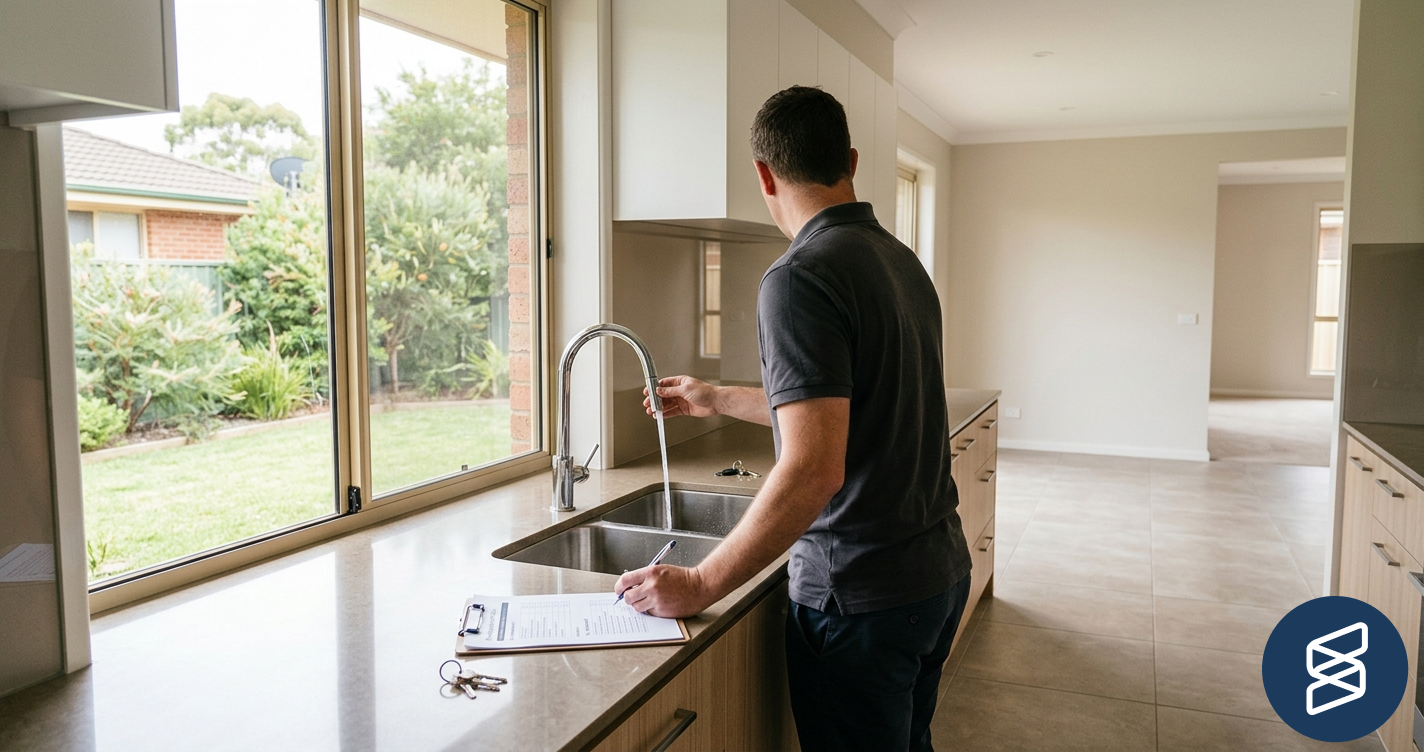
Settlement is three days away. Your conveyancer has confirmed the date, your lender is ready, and you've already started thinking about where the couch goes. Then someone mentions the pre-settlement inspection and you realise you have no idea what you're actually supposed to check, how long it takes, or what happens if you find something wrong.
This is the walkthrough guide for that moment. What a pre-settlement inspection is, what to look for, and what to do if the property isn't in the condition you expected.
What a pre-settlement inspection actually is
A pre-settlement inspection (also called a final inspection in Australia) is your final walkthrough of the property before you take ownership. It usually happens one to five days before settlement, depending on your state and what your conveyancer arranges with the agent.
The purpose is simple: confirm the property is in substantially the same condition as when you signed the contract, allowing for fair wear and tear. You're not doing a building inspection. You're not looking for hidden defects. You're checking that nothing has changed, nothing is missing, and nothing has been damaged since you last saw the place.
This is different from your building inspection, which happened earlier in the process and assessed the property's structural condition. The pre-settlement inspection is a practical check, not a technical one. You don't need a licensed inspector for this. You do it yourself.
When to do it
As close to settlement as possible. Across Australia, buyers typically do their pre-settlement inspection in the 5 business days before settlement. Ideally the day before, or two days before at most. The closer to settlement you do it, the less time there is for something to go wrong between your inspection and the handover.
Your conveyancer or the selling agent will arrange access. If nobody has mentioned it, ask your conveyancer. You are entitled to a pre-settlement inspection under standard contract conditions in every Australian state. Don't skip it because you feel awkward asking, and don't let the agent tell you it's "not necessary" or "not standard". It is both.
How long does it take? For a standard house, 30 to 45 minutes. For a larger property, up to an hour. Don't let yourself be rushed. If the agent is hovering and checking their watch, politely tell them you need the time.
What to bring
You don't need much, but these four things make the difference between a useful inspection and a wasted trip.
Your contract of sale. Specifically the inclusions and exclusions list. This tells you exactly what's supposed to stay with the property (fixtures, appliances, window coverings, light fittings) and what the vendor is taking. Without it, you're guessing.
Your building inspection report. If the vendor agreed to rectify items from your building inspection as a condition of settlement, bring the report so you can verify the work has been done. If you negotiated specific repairs, check them off one by one.
Your phone. Camera on, torch ready. Photograph everything that concerns you. If there's a dispute after settlement, timestamped photos from the pre-settlement inspection are your evidence. Photo the meter readings (electricity, gas, water) as well.
A notepad or the notes app. Write down anything you notice as you go. Don't rely on remembering it later.
What to look for in a pre-settlement (final) inspection
Buyers often arrive at a pre-settlement inspection unsure what they are actually meant to be checking. The job is narrower than people expect. This is not a building inspection, and you are not trying to find new defects. You are checking that the property is in substantially the same condition as on the day you signed the contract, allowing for fair wear and tear.
In practice you are looking for four specific things:
- Damage that has appeared since contract. New cracks, scratches, broken tiles, holes in walls, damaged flooring, or anything else that wasn't there on the day you signed. Compare against memory and any photos you took at the original inspection.
- Inclusions that should still be there. Anything listed as an inclusion in the contract of sale (appliances, light fittings, blinds, garden sheds, pool equipment, TV brackets) must still be on the property at handover.
- Repairs the vendor agreed to complete. If your building and pest condition required the vendor to rectify specific items, this is when you verify each one. Bring your building inspection report and tick items off one by one.
- Working services. Lights turn on, taps run hot and cold, toilets flush, smoke alarms work, hot water flows, the garage door opens. You are not running a deep diagnostic, you are confirming the basics.
What you are not looking for: new structural defects, hidden plumbing problems, undisclosed termite activity, or anything that would have been the job of your pre-purchase building inspection months earlier. If you've spotted something serious that was missed at the building inspection, it is worth a separate conversation with your conveyancer, but the pre-settlement inspection itself isn't the moment to renegotiate the deal from scratch.
The room-by-room checklist below sits underneath those four headings. Work through it systematically and you'll cover both the headline checks and the specific items typical Australian contracts care about.
The room-by-room checklist
Work through the property systematically. Going room by room stops you from missing things because you got distracted by one issue.
Kitchen
- All appliances included in the contract are present: oven, cooktop, rangehood, dishwasher, microwave if listed
- Appliances turn on and respond (you don't need to run a full cycle, just confirm they power up)
- Taps run hot and cold, drain properly
- No new damage to benchtops, splashback, or cabinetry since the last inspection
- Exhaust fan works
- Light fittings present and working
Bathrooms and laundry
- Taps run hot and cold in every basin, shower, and bath
- Toilets flush and fill
- No new leaks or water staining since the last inspection
- Shower screens intact
- Exhaust fans work
- Towel rails, toilet roll holders, and mirrors are present (if included)
- Laundry taps functional, washing machine connection accessible
Bedrooms and living areas
- All light fittings present and working (switch every one on)
- Power points working (bring a phone charger to test a few)
- Window coverings (blinds, curtains) are present if included in the contract
- Doors open and close properly
- No new damage to walls, floors, or ceilings
- Built-in wardrobes have shelving, rails, and doors intact
- Air conditioning units present and turning on (if included)
Exterior
- Fencing intact, gates open and close
- Letterbox present
- Garden in reasonable condition (the vendor isn't required to maintain it perfectly, but they shouldn't have let it become overgrown or stripped plants they agreed to leave)
- Outdoor structures (shed, pergola, carport) in the same condition as at contract
- Clothesline present (if included)
- Pool equipment present and in working order (if applicable)
- No new damage to driveways, paths, or external walls
Garage and storage
- Garage door opens and closes (test the remote if one was included)
- Light fittings work
- No items left behind that shouldn't be there (vendors sometimes leave junk)
- Shelving or storage systems present if included
Services and meters
- Read and photograph the electricity meter
- Read and photograph the gas meter (if connected)
- Read and photograph the water meter
- Test the hot water system (run a hot tap for a minute)
- Check the switchboard: does it look the same as in the building inspection photos?
- Test smoke alarms by pressing the test button on each one
What to do about the building inspection items
If your purchase was subject to a building and pest condition, and the vendor agreed to rectify specific items before settlement, the pre-settlement inspection is when you verify the work.
Go through the building inspection report and check each agreed rectification:
- Has the work been done?
- Does it look like it was done by a licensed tradie, or does it look like a quick patch job?
- Do you have a compliance certificate or completion certificate for the work?
If the vendor agreed to fix the rising damp and you can still see damp staining on the wall, that's a conversation for your conveyancer before settlement. If the deck was supposed to be re-framed and it looks like someone just added a coat of paint, same thing.
If the vendor wasn't required to rectify anything (maybe you negotiated a price reduction instead), you're still checking that nothing has worsened. A crack that was 3mm at the building inspection and is now 10mm is a change in condition, even if no rectification was agreed.
Common problems people find
Most pre-settlement inspections go smoothly. The property is empty, clean, and in the condition you expected. But when problems do come up, they tend to fall into a few categories.
Damage from the move-out. Gouges in walls from furniture, scratched floorboards, chipped door frames, broken tiles. The vendor is responsible for leaving the property in the same condition as at contract, fair wear and tear excepted. A scuff mark from moving a couch is wear and tear. A hole in the plasterboard is damage.
Missing inclusions. The vendor took the dishwasher, or the blinds, or the garden shed shelving. If it's listed as an inclusion in the contract, it stays. Photograph the empty space and tell your conveyancer.
Fixtures removed and not replaced. Light fittings taken down and replaced with bare bulbs. Towel rails removed. TV brackets pulled off leaving holes in the wall. Unless the contract specifically listed these as exclusions, they should still be there.
Agreed repairs not done. The vendor said they'd fix the leaking tap or replace the cracked window before settlement. The tap still leaks. The window is still cracked. This needs to go to your conveyancer before you settle.
Property not cleaned. This is a grey area. Most contracts don't require the vendor to professionally clean the property, but they should leave it in a reasonably clean state. Rubbish left behind, filthy ovens, or abandoned furniture is not reasonable. Again, photograph it and raise it with your conveyancer.
Utilities not working. The vendor may have disconnected electricity, gas, or water before you've had a chance to connect in your name. If things aren't working during the inspection, confirm whether it's a disconnection issue or an actual fault before raising it as a problem.
What to do if something is wrong
If you find issues during the pre-settlement inspection, resist two temptations: don't ignore it and hope for the best, and don't refuse to settle on the spot without talking to your conveyancer first.
Step 1: Document everything. Photograph every issue. Note the location, the condition, and what the contract or building report says about it. The more specific you are, the stronger your position.
Step 2: Call your conveyancer immediately. Not the agent. Not the vendor. Your conveyancer. Describe what you've found and send the photos. They will advise on whether the issue is significant enough to delay settlement, request a holdback (a portion of the purchase price held in trust until the issue is resolved), or address after settlement.
Step 3: Do not delay settlement without legal advice. Failing to settle on the agreed date without a legally valid reason can put you in breach of the contract, which can result in penalty interest or, in serious cases, the vendor terminating the contract and keeping your deposit. Your conveyancer knows where the line is. Let them guide you.
Step 4: Put it in writing. Whatever you and the vendor agree to, get it documented through the conveyancers. A verbal promise from the agent that "the vendor will fix it next week" is worthless if settlement has already gone through.
State-by-state notes
Pre-settlement inspections are standard practice across Australia, but the specific contractual rights vary.
Victoria. Standard contract of sale includes a right to inspect before settlement. The inspection should be booked through the agent. If defects or damage are found, the buyer can seek a price reduction or require rectification, but must act through their conveyancer before the settlement date.
New South Wales. The right to a pre-settlement inspection depends on the contract terms. Most standard contracts include it, but check yours. In NSW, settlement and exchange are separate events, so the timing of the inspection relative to exchange matters.
Queensland. Standard REIQ contracts include a right to inspect the property in a reasonable state of repair before settlement. Body corporate records should be reviewed separately if buying a unit or townhouse.
Western Australia. Pre-settlement inspections are standard practice. The standard REIWA contract includes provisions for the property to be in the same condition as at contract. Check whether your contract specifies a timeframe for the inspection.
South Australia. The right to inspect before settlement is typically included in the standard contract. Arrange through your conveyancer. If the vendor has made undertakings about condition or repairs, this is when you verify them.
In every state: if your contract doesn't explicitly mention a pre-settlement inspection right, ask your conveyancer. The absence of a clause doesn't necessarily mean you can't inspect, but your conveyancer needs to arrange access appropriately.
Save this page as a printable checklist
The pre-settlement inspection works best with a checklist in hand. You don't need a separate template or downloadable PDF, this page is designed to be printed or saved as a PDF and ticked off room by room. From most browsers, choose Print from the menu (or press Ctrl + P on Windows, Cmd + P on Mac) and select Save as PDF as the destination. Tick each room as you go, photograph anything that doesn't pass, and email the saved checklist plus your photos to your conveyancer if you need to raise concerns before settlement.
If you'd rather have a one-page summary, the four checks above (damage, inclusions, repairs, working services) are the headline list. The room-by-room sections expand each one into the specific items typical for Australian homes, including state-specific notes for Queensland, New South Wales, Victoria, Western Australia, and South Australia.
If you're not sure what to look for
The pre-settlement inspection is the last chance to check the property before it's yours. If you've already had a building inspection and you're not sure which items were supposed to be fixed, or whether the condition has changed, Snagger can help you make sense of your original report. Every finding explained, severity rated, and sorted by what needs attention before settlement. See what that looks like on a real report.
You're about to own this property. Make sure you know what you're walking into.
Settlement coming up and your report still confuses you?
Upload your Australian building or pest inspection report and get every finding explained in plain English. Know exactly which items should have been fixed before you settle.
Upload your reportSnagger is a comprehension aid only. This article is general information and does not constitute professional building, legal, or financial advice. Always consult a licensed building inspector, conveyancer, or other qualified professional before making any purchasing decision.
More articles

Should I get a building inspection before buying at auction in Australia?
Auctions in Australia are unconditional. Here's why a pre-auction building inspection matters, how to arrange one, and what to do if it finds problems.

First home buyer checklist Australia: from pre-approval to settlement
The full first home buyer journey, broken into stages with tickable checkboxes. From saving a deposit to settlement day, everything you need in order.
How many defects is too many in a building inspection?
Your building inspection report has 20 findings and you're wondering if it's a walk-away report. Here's how to sort signal from noise when the list is long.